
Introduction: Dates Are More Than an Old Tradition
Dates can be transformed from a traditional food associated with Ramadan, hospitality, and special occasions into a modern daily habit. They are natural, easy to carry, simple in their ingredients, and suitable for many moments throughout the day: at the office with coffee, before a workout, while traveling, or inside a school lunchbox.
But the point is not to eat large amounts of dates. Dates are not a magic food, and they should not be treated as one. The smarter approach is to enjoy them at the right time and in the right amount: one or two dates when you want something naturally sweet, need quick energy, or want a simpler alternative to heavily processed sweets.
Dates have a rare advantage. They carry deep cultural history, yet they require no preparation. A single date can bring a sense of old-world hospitality while still fitting perfectly into the pace of modern life.
So the real question is no longer: “Are dates good for you?”
The better question is: How can we make dates a smart daily habit?
Why Dates Work So Well as a Modern Daily Habit
Modern life does not favor complicated food. People want choices that are quick, clean, portable, and easy to eat without tools, preparation, or planning. This is exactly where dates stand out.
Dates do not need a plate. They do not need a spoon. They do not need heating. They do not ask you to change your day. You can keep them on your desk, in your gym bag, in your travel bag, or inside a child’s lunchbox.
That simplicity is not a small detail. It is one of the main reasons dates can move from being a seasonal tradition to becoming an everyday snack.
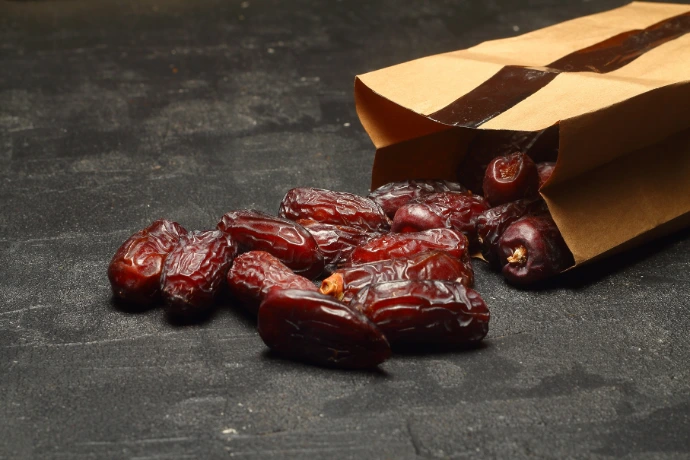
Dates, especially Medjool dates, also offer a different eating experience from many quick snacks. Their texture is soft, their flavor is deep, and their sweetness is naturally close to caramel. This gives them the feeling of a treat, but in the form of a whole fruit.
Still, the truth must be clear: dates contain natural sugars and carbohydrates. “No added sugar” does not mean “low sugar.” It only means no external sugar has been added. A smart daily habit is not about overeating dates. It is about eating them with awareness.
Dates at Work: A Quick Snack with Coffee
At work, the weakest food decisions often do not happen at lunch. They usually happen in the middle of the day, between meetings, when focus drops and the craving for something sweet and quick becomes stronger.
This is where dates become practical.
One or two dates with coffee can be a better choice than a random biscuit or a candy bar loaded with added sugar. Not because dates are “sugar-free,” but because they are a whole fruit, naturally sweet, and contain fiber and minerals as part of their natural structure.
Dates with coffee are more than a snack. They create a small ritual. The bitterness of coffee balances the sweetness of dates, while the soft texture of Medjool dates makes the experience feel close to a premium dessert, without the complication.
Practical Ways to Eat Dates at the Office
- One Medjool date with black coffee or Arabic coffee.
- Dates with a small handful of almonds or walnuts.
- Dates stuffed with peanut butter or tahini.
- Dates with a small piece of dark chocolate.
- A small sealed container of dates on your desk instead of relying on whatever sweets are nearby.
The rule is simple:
Keep the better choice close before you need it.

Dates Before a Workout: When Do They Make Sense?
Many people ask: are dates good before a workout?
The answer: they can be useful for some people, but not in the same way for everyone.
Dates are a quick source of carbohydrates. They are easy to eat, small in size, and simple to carry. That makes them a practical pre-workout snack, especially when you do not have time for a full meal or need a small bite before moving.
For some people, one or two dates before training may be enough. But the best approach is to test how your own body responds. Some people prefer training on a nearly empty stomach. Others need a light snack. Some need a complete meal a few hours before exercise.
How to Use Dates Around Workouts Wisely
- Before a workout: try one or two dates if your body tolerates them well.
- After a workout: pair dates with a source of protein, such as yogurt, milk, or nuts.
- On a long day: include dates as part of a balanced snack, not as a constant meal replacement.
- For intense training: do not rely on dates alone if your nutritional needs are higher.
Dates are not a “secret performance hack.” That kind of language is weak marketing.
Their real value is simpler and stronger: a small, portable bite that is easy for many people to digest and rich in natural carbohydrates.

Dates While Traveling: A Simple Food That Understands the Road
Travel reveals the value of practical food. On the road, food options are often heavy, unclear, overpriced, or high in added sugar, fat, and salt. That is why dates have historically been suitable for journeys, and why they still make sense today.
In the car, on a train, on a plane, or during a long workday away from home, dates give you a snack that needs no preparation and creates no mess. But turning dates into a modern travel habit requires a little organization.
Instead of throwing an open bag of dates into your luggage, prepare a small snack box with:

- Medjool dates.
- Unsalted nuts.
- Small pieces of dark chocolate.
- Unsweetened coconut flakes.
- Small napkins or wooden picks for serving.
This turns dates from “something in the bag” into part of a smarter travel system.
Dates while traveling are not just food. They are a small feeling of home when you are away from it.
Dates for Kids at School: How to Make Them Appealing
With children, it is not enough for food to be nutritious. It has to be accepted, simple, and easy to eat. A common mistake is presenting dates to a child as a health duty. Children do not eat nutritional information. They eat shape, taste, and experience.
So if you want to include dates in a school lunchbox, do not pack a large amount without a plan. Start small and make them visually appealing.
School Snack Ideas with Dates
- One Medjool date split open and filled with peanut butter, if the school allows nuts.
- Dates with small cheese cubes.
- Chopped dates with apple slices.
- Small date balls made with oats and cocoa, with no added sugar.
- Dates with yogurt in a separate container.
- Dates filled with tahini and sesame, if the child enjoys Middle Eastern flavors.
Portion matters more than enthusiasm. One date a child enjoys is better than five dates that come back home untouched.
The rule here is clear:
Do not present dates to children like medicine. Present them as something delicious.
How Many Dates Should You Eat Per Day?
There is no single number that works for everyone. The right amount depends on age, activity level, overall diet, health status, and the reason for eating dates.
Practically, many people can include one to three dates per day as part of a balanced snack. However, anyone monitoring blood sugar, following a low-carbohydrate diet, or working with specific medical advice should treat dates as a carbohydrate-rich food that contains natural sugars, not as a food without limits.
Dates can be a good choice when they fit inside a balanced diet. They are not permission to snack without structure.
A Smarter Way to Avoid Overeating
Instead of eating many dates on their own, try pairing them with:
- Nuts.
- Yogurt.
- Cheese.
- Tahini.
- Unsweetened coffee.
- Oats.
The reason is simple: combining dates with a source of healthy fat, protein, or additional fiber can make the snack more satisfying and may reduce the desire to keep eating more.
Practical Ways to Eat Dates Every Day
Turning dates into a daily habit does not require a big decision. It requires putting them in the right place.
1. Next to Coffee
Keep a small container of dates near your coffee station. When you drink coffee, one date becomes a clear alternative to sugar or sweets.
2. On Your Work Desk
Choose a small pack or sealed container. Do not leave a large open box in front of you. Structure helps control portions.
3. In Your Gym Bag
Pack two dates only, not a full container. The goal is a practical snack, not unconscious eating.
4. In Your Travel Bag
Mix dates with unsalted nuts. This makes the snack more balanced and easier to use on the road.
5. In a School Lunchbox
Serve dates in a small, attractive form. Health advice alone will not make children eat them.
6. After Lunch
One date with coffee or tea may be enough to satisfy a sweet craving without reaching for a large dessert.
7. For Everyday Hospitality
Do not wait for special occasions. Make dates part of daily home hospitality: a small plate, elegant presentation, and a reasonable amount.
Common Mistakes When Eating Dates as a Daily Snack
Mistake 1: Thinking Dates Are Low in Sugar
Dates with no added sugar are not the same as low-sugar dates. Dates naturally contain sugars. The difference is that they are a whole fruit, not a manufactured sweet.
Mistake 2: Eating Without a Set Portion
Opening a large pack and eating directly from it makes portion control harder. A better option is to place a small amount on a plate or in a container.
Mistake 3: Using Dates as a Replacement for Every Meal
Dates can be an excellent snack in specific moments, but they are not a permanent replacement for a complete meal that includes protein, vegetables, and healthy fats.
Mistake 4: Serving Dates to Children in a Boring Way
Children need food to look appealing. Plain dates may not always work, but stuffed, sliced, or blended dates with ingredients the child already likes can change the experience.
Mistake 5: Ignoring Storage
Good dates need proper storage to preserve their texture and flavor. This is especially important for soft dates such as Medjool dates, because heat and humidity can affect their quality.
Medjool Dates: Why They Fit Everyday Life
Medjool dates have a special place because they are large, soft, and naturally sweet with a flavor close to caramel. These qualities make them useful in many ways: with coffee, in snacks, inside recipes, or as an elegant gift.
But the strength of Medjool dates is not only their size. It is the experience they deliver. One high-quality date can create more satisfaction than several small pieces of candy that disappear quickly and leave little behind.
So if you want to turn dates into a daily habit, choose a quality you can enjoy in smaller amounts. Quality here is not a luxury. It can also be a tool for portion control.
How to Make Dates a Daily Habit Without Getting Bored
A habit fails when it becomes too repetitive. Do not eat dates the same way every day.
Rotate the experience throughout the week:
- Saturday: dates with coffee.
- Sunday: dates with nuts.
- Monday: dates before the gym.
- Tuesday: dates stuffed with tahini.
- Wednesday: dates with yogurt.
- Thursday: dates in a travel or car snack box.
- Friday: dates served beautifully for guests or family.
This turns dates from “a fruit we eat sometimes” into a flexible part of everyday life.
Conclusion: One Date at the Right Time
Making dates a daily habit does not mean eating them in large amounts. It means using them intelligently.
One date with coffee at work, before a workout, inside a travel bag, or in a school lunchbox can turn dates into a natural, practical snack that fits modern life.
The strength of dates is not only in their history. It is in their simplicity: a clear whole fruit, easy to carry, rich in flavor, and able to fit into the details of the day without complication.
We do not need to eat dates only because the past did.
We need to rediscover them because the present needs them in a smarter way.
FAQs About Making Dates a Daily Habit
Can you eat dates every day?
Yes, dates can be eaten daily in suitable amounts as part of a balanced diet. The key is portion control, because dates contain natural sugars and carbohydrates.
Are dates good before a workout?
Dates may work well for some people before exercise because they are a quick source of carbohydrates and easy to eat. However, the right amount and timing depend on the person and the type of workout.
Are dates a good school snack for kids?
Dates can be a suitable school snack when served in small portions and in an appealing way, such as stuffed dates, dates with cheese, or date balls made with oats and cocoa and no added sugar.
Does “no added sugar” mean dates are low in sugar?
No. “No added sugar” means no external sugar has been added. Dates themselves naturally contain sugars.
What is the best way to make dates a daily habit?
The best way is to place them where they fit naturally into your day: next to coffee, on your work desk, in your gym bag, in your travel bag, or inside a school lunchbox.
How many dates can you eat per day?
There is no single amount that suits everyone, but one to three dates may be suitable for many people as a daily snack. Anyone monitoring blood sugar or following a specific diet should follow medical or nutrition guidance.
Primary Keyword: dates daily habit benefits of eating dates daily, dates as a healthy snack, dates before workout, dates at work, dates for kids, healthy travel snacks, ways to eat dates, Medjool dates, no added sugar dates
Article Sources
[1] Food and Agriculture Organization of the United Nations — History and cultivation of date palms over thousands of years.
[2] FAO — Egypt as the world’s largest producer of dates and its annual production volume.
[3] USDA FoodData Central — Nutritional data for Medjool dates.
[4] World Health Organization — Free sugars and general recommendations for reducing sugar intake.
[5] Mayo Clinic / Mayo Clinic Health System — Carbohydrates before exercise and the use of fruits and dates as easy-to-digest choices for some people.
[6] CDC — Adding fruits and vegetables to children’s meals and snacks and preparing easy portions.
[7] American Heart Association — Healthy snack ideas for children and teenagers, including fruits, nuts, and unsweetened dried fruits.